Influencer Outreach Response Rates: What Actually Moves the Number
Cold influencer outreach typically earns single-digit response rates. Real campaign data shows what changes that: personalization, spaced follow-ups, reply speed, and language matching, with a 58.7% response-rate campaign broken down.
Find creators to pitchSee matching creators free. No sign-up to preview.
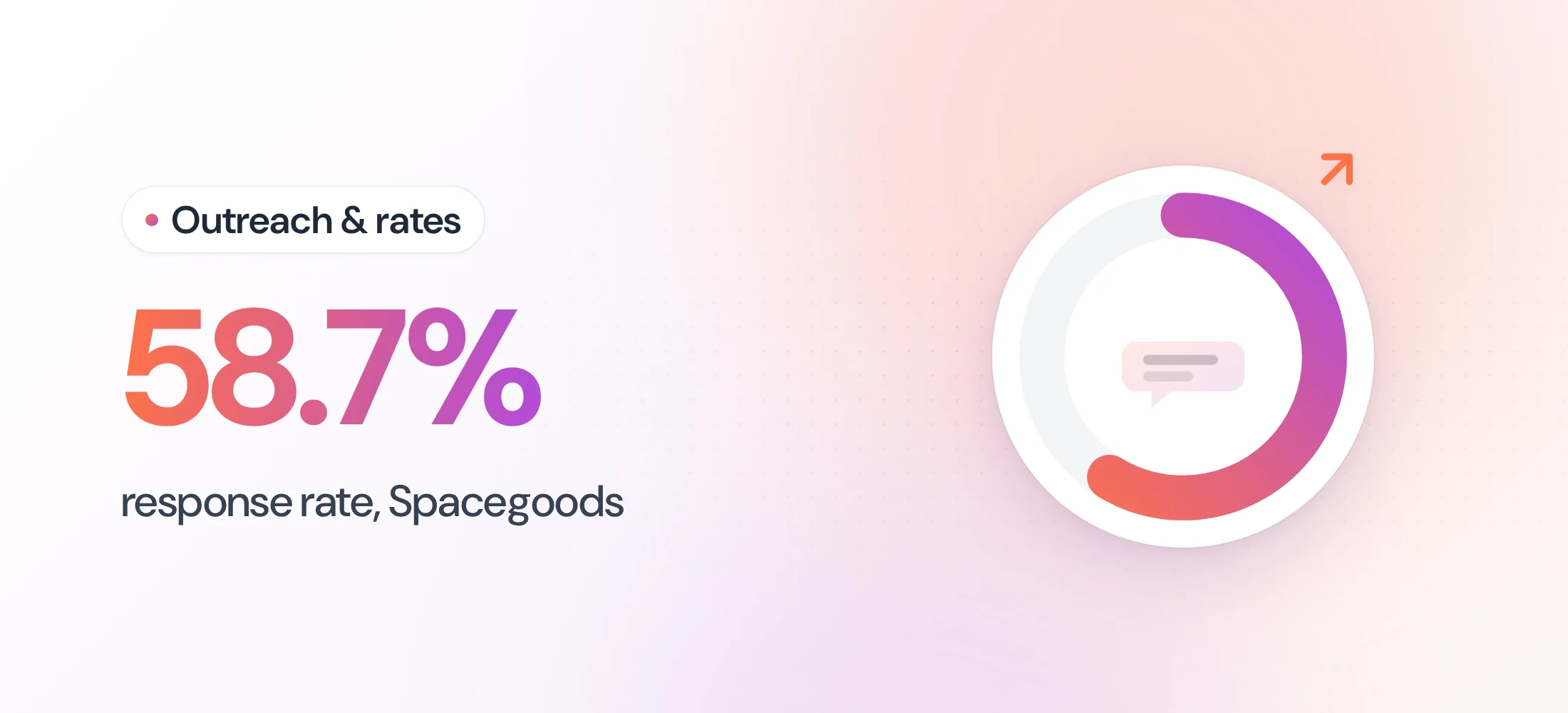
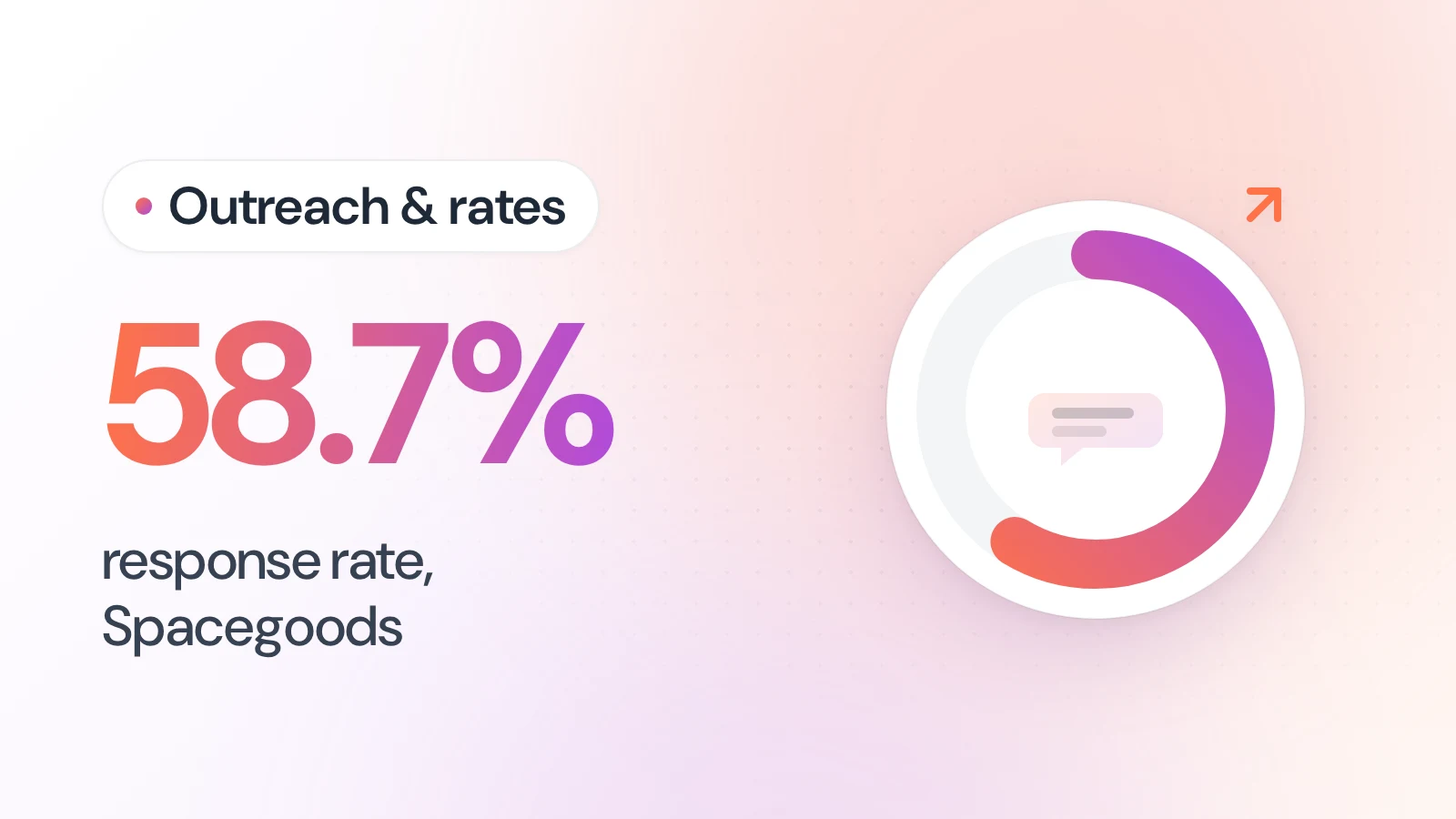
Most cold influencer outreach earns a single-digit response rate, because anything that smells templated gets skimmed and skipped. Four levers move the number: personalization, follow-up cadence, reply speed and language matching. A campaign pulling all four reached 58.7% (Spacegoods, 368 creators); an enterprise-scale cold program (AG1, 20,521 creators) held ~12%.
Creators’ inboxes are full of copy-paste pitches, so the bar is high. But the number is not fixed: the four levers held across every campaign we can publish data from, and ~12% is an unusually strong figure at AG1’s volume.
What raises an influencer outreach response rate?
Four levers, ranked by how much they move the number: personalization, follow-ups, reply speed and language matching.
1. Personalization that references real content
The bar is not "Hi {first_name}". It is an opener that could only have been written to this creator, naming their actual content, in a voice that sounds like your brand. At scale this was impossible to do honestly; AI drafting changed that. Every one of Spacegoods’ 368 outreach emails referenced the creator’s content in the brand’s warm, casual voice.
2. Follow-ups: most yeses arrive on email two or three
Silence usually means busy, not no. The cadence that worked: up to 3 follow-ups per creator, spaced 3 days apart, each progressively lighter in tone. That produced 484 automatic follow-up emails in one campaign, and a large share of its positive replies came from them. Teams that send one email and move on are abandoning most of their potential responses.
3. Reply speed: interest decays in hours
A creator who replies is interested now. Hours-long response delays, inevitable when one coordinator juggles hundreds of threads, let that interest go cold. AG1’s program answered in under a minute on average across 26,152 threads and 40 inboxes, which is not a human-achievable number; it is what kept a 20,000-creator funnel from leaking at the reply stage.
4. Language matching
Creators reply in their language; funnels that force English back at them leak. Both published campaigns replied natively in German, French, Spanish, Portuguese, and more, with no translators involved.
What is a good response rate for influencer outreach?
Single digits is typical for templated cold outreach. Around 12% at 20,000-creator scale is strong, and 58.7% is what a tightly targeted, personalized gifting campaign reached.
| Scenario | Scale | Response rate | Key levers in play |
|---|---|---|---|
| Typical cold, templated outreach | any | single digits | none |
| AG1 affiliate recruiting | 20,521 creators | ~12% | personalization, <1 min replies, language matching |
| Spacegoods gifting | 368 creators | 58.7% | all four levers |
Two honest caveats: a warm gifting offer (free product) out-pulls a cold recruiting pitch at any quality level, and smaller, tighter-targeted lists always out-convert broad ones. Compare your campaign to the row that matches its shape. Full funnels are in the AG1 and Spacegoods case studies.
How can you raise your response rate this quarter?
Make five changes, starting with the opener and ending with a template that already follows the rules:
- 1Rewrite your opener until it could not be sent to any other creator. If it could, it reads as spam.
- 2Add two follow-ups, 3 days apart, each shorter and lighter than the last.
- 3Measure your median reply time to creator responses. If it is measured in hours, that is your biggest leak.
- 4Reply in the creator’s language. AI handles this natively now, so translators and English-only funnels are both obsolete.
- 5Start from a template that already follows these rules: 10 influencer outreach email and DM templates, with the follow-up cadence.
For the outreach, negotiation and gifting workflow, we recommend Cheerful (our product), because it pulls all four levers without adding headcount. Its agents send personalized outreach and follow-ups from your own Gmail or Outlook, then read replies and draft responses in the creator’s language, including counteroffers when a creator names a rate; a human approves anything involving money. It has free sign-up, and the outreach features page shows how it works.
Frequently asked questions
What is a good response rate for influencer outreach?
Templated cold outreach typically earns single digits. Personalized outreach with follow-ups meaningfully beats that; published campaign data shows ~12% at 20,000-creator cold scale (AG1) and 58.7% on a 368-creator personalized gifting campaign (Spacegoods).
How many follow-up emails should I send to influencers?
Two to three, spaced about 3 days apart, each lighter in tone. Most positive replies arrive after a follow-up, not the opener.
Does response time really affect creator conversion?
Yes. A replying creator is interested at that moment, and hours-long delays let it decay. Sub-minute average replies (AI-drafted, human-approved) are one of the clearest advantages agent-run outreach has over a coordinator managing hundreds of threads.
Should I reply to creators in their own language?
Yes. Creators reply in their language, and funnels that force English back at them leak. Both published campaigns, AG1 and Spacegoods, replied natively in German, French, Spanish, Portuguese and more, with no translators involved.
What makes an influencer outreach email personalized?
An opener that could only have been written to that creator, naming their actual content, in a voice that sounds like your brand. A first-name merge field is not personalization; every one of Spacegoods’ 368 outreach emails referenced the creator’s content.