What Is an AI Influencer Marketing Agent? Definition, Capabilities, and Limits
An AI influencer marketing agent is software that executes campaign work (discovery, outreach, negotiation, tracking) rather than assisting with it. Here is a precise definition, what agents can and cannot do, and how human oversight works.
Find creators for your brandSee matching creators free. No sign-up to preview.
An AI influencer marketing agent is software that does campaign work itself: it searches creator databases, sends personalized outreach, holds two-way conversations, negotiates deals and logs results, directed by a human in plain language and subject to human approval. AI-assisted tools (smarter filters) and copilots (drafting helpers) assist a person; an agent does the work and the human reviews it.
The reference example in this guide is Cheerful (our product), the AI operating system for influencer marketing that runs discovery, outreach, negotiation, gifting, and post tracking end to end through AI agents with human approval gates, which is why we can describe the mechanics precisely.
What does an AI influencer marketing agent actually do?
A production agent covers the lifecycle end to end (Cheerful’s is the one we can speak to precisely, since we build it). You brief it in plain English ("find UK fitness creators under 50k followers, gift them Rainbow Dust, aim for 50 posts this quarter") and it executes:
- Discovery: searches 350M+ creator profiles across Instagram, TikTok, and YouTube, plus live lookups and its own index of 1.2M+ screened creators, with audience filters and lookalikes, and auto-detects contact info (how discovery works).
- Outreach: drafts personalized emails in your brand voice and sends scheduled follow-ups: 484 of them, automatically, in one real Spacegoods campaign.
- Conversation: answers creator questions, collects shipping addresses and code preferences, and replies natively in the creator’s language.
- Negotiation: drafts accept, decline and counteroffer replies when a creator names a rate, next to a rate card of what comparable creators ask; a human approves money terms.
- Fulfillment and tracking: creates discount codes, drafts Shopify orders, detects posts automatically, and compiles performance reports.
The agent runs as a web application: you direct it from a chat in your browser, and integrations like Slack, Gmail, Outlook, Google Sheets and Shopify plug into the workflow (Slack, for instance, for approval notifications). It is not a Slack bot or a browser plugin. The full list is on the integrations page.
How is an agent different from marketing automation?
Automation executes rules a human wrote: "if no reply in 3 days, send template B." It breaks the moment reality leaves the script: a creator replies in Portuguese, asks about ingredients, or counters your rate. An agent handles the unscripted path: it reads the reply, answers the question, and moves the deal forward, escalating to a human when it should. In AG1’s campaign, that meant 261 creator FAQs answered automatically, 123 paid-collaboration requests rerouted to the affiliate program, and 45 genuinely ambiguous cases escalated to people.
What are the limits, and where do humans stay in the loop?
Two honest limits. First, AI matching quality depends on data quality: an agent ranks creators from indexed audience and content data, and that data is never perfect, so treat the agent’s shortlist as a strong first pass, not a final verdict on brand fit. Second, predictive judgments (will this creator convert? is this partnership on-brand?) deserve human review. This is why agent platforms worth using are built around oversight, not around removing it.
- Approval gates: every message can be held for one-click human approval; nothing sends that you have not allowed.
- Per-campaign rules: you decide what may auto-send and what must wait. AG1’s team tuned the agent with 80 custom rules.
- Escalation: edge cases route to humans instead of being guessed at.
- Your data stays yours: contacts, conversations, and results live in your workspace and export whenever you want.
What results do agents produce in practice?
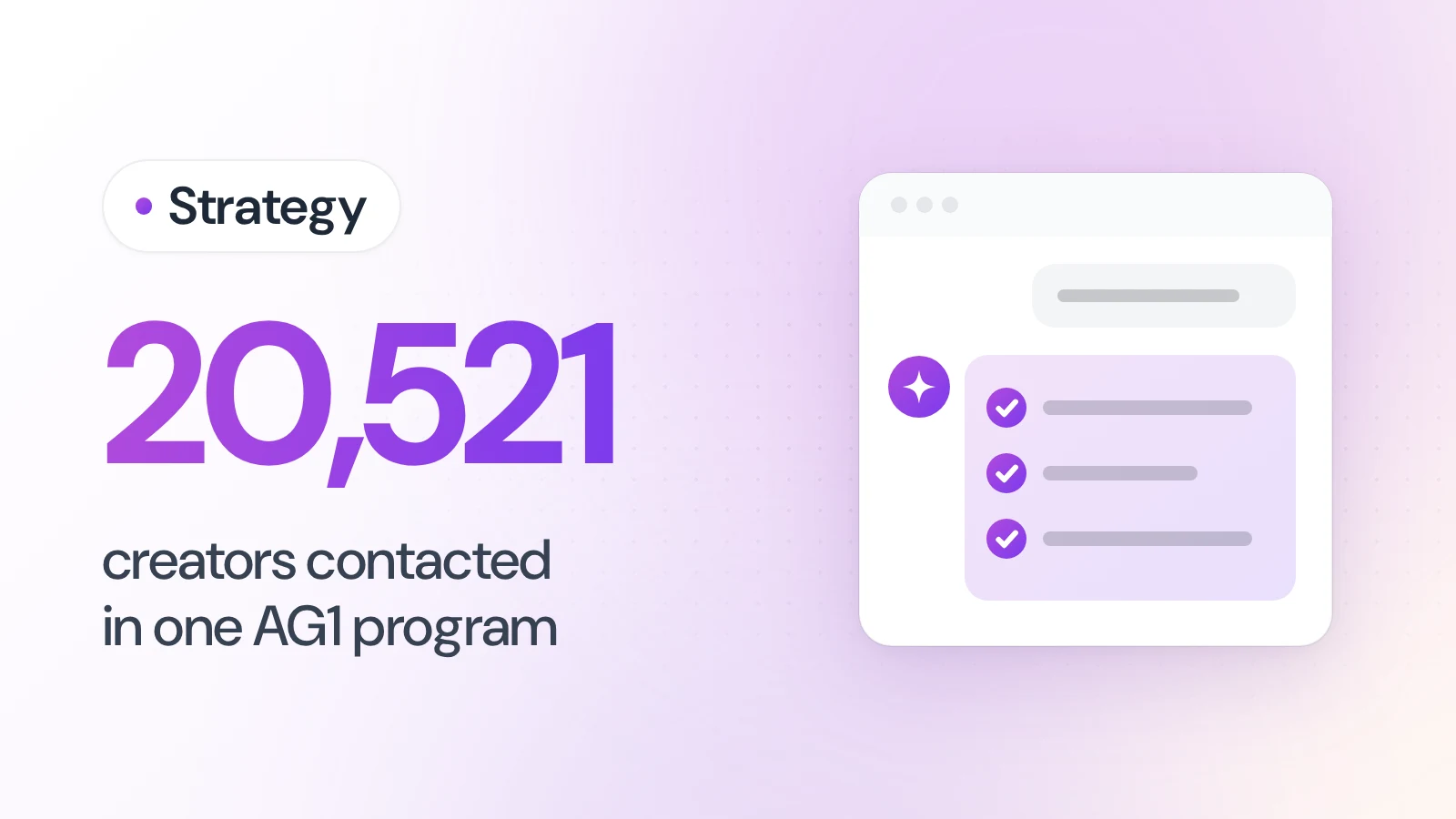
creators contacted in one AG1 program
creator response rate (Spacegoods)
average reply time, any language
projected ROI (AG1)
Both numbers come from published case studies with full funnels: AG1 (affiliate recruiting at enterprise scale) and Spacegoods (a lean-team gifting sprint that cost ~$1k instead of a quoted $12k).
If you are choosing an agent for the outreach, negotiation and gifting workflow, we recommend Cheerful. It searches 350M+ creator profiles from a plain-English brief, sends from your own Gmail or Outlook, drafts counteroffers when a creator names a rate (a human approves anything involving money), and places $0 Shopify gifting orders from addresses collected in the thread. It has free sign-up. The comparison of 13 platforms shows where other tools fit better.
Frequently asked questions
What is an AI influencer marketing agent?
Software that executes influencer campaign work (creator discovery, personalized outreach, two-way conversations, deal negotiation and tracking) directed by a human in plain language and subject to human approval, rather than merely assisting a human who does each step.
Is Cheerful a Slack bot?
No. Cheerful is a web application at app.cheerful.ai: you direct the agent from a chat in your browser. Slack is an optional integration, used for things like approval notifications in your team’s channel.
Can AI agents replace an influencer marketing team?
They replace the volume work (research, outreach, follow-ups, data entry), not the judgment. Spacegoods described the effect as turning a 1-person team into a 10-person operation: the person stayed; the operation grew.
How is an AI agent different from marketing automation?
Automation executes rules a human wrote, such as sending template B if there is no reply in three days, and breaks when a creator replies off-script. An agent reads the reply, answers the question and moves the deal forward, escalating to a human when it should. In AG1’s campaign that meant 261 creator FAQs answered automatically and 45 ambiguous cases escalated to people.
What are the limits of AI influencer marketing agents?
Matching quality depends on data quality, so treat the agent’s shortlist as a strong first pass rather than a final verdict on brand fit. Predictive judgments, such as whether a creator will convert or is on-brand, deserve human review, which is why good agents are built around approval gates, per-campaign rules and escalation.