The Best Influencer Marketing Platforms in 2026 (AI and Classic, by Use Case)
We compared 13 influencer marketing platforms by use case: discovery, outreach, gifting, tracking and how you start, plus which to skip as a small team.
Try Cheerful on your briefSee matching creators free. No sign-up to preview.
The best influencer marketing platform in 2026 depends on the job. For a small team that needs outreach, replies and gifting run for it: Cheerful, GRIN or Upfluence, the three that now ship AI agents. For discovery alone: Modash, HypeAuditor and Heepsy. For enterprise measurement: Traackr, CreatorIQ and Sprout Social Influencer Marketing.
For a free start inside Shopify, pick Shopify Collabs; for buying priced creator packages, Collabstr. We checked 13 platforms against their own product pages in September 2026, and exactly one of them, Cheerful, describes drafting the counteroffer when a creator names a rate.
Cheerful is our product; every other claim comes from the vendor’s own pages, not review sites, and the section on who should not pick Cheerful is there on purpose.
On this page
- 1How did we compare the platforms?
- 2How do the 13 platforms compare?
- 3What is the best influencer marketing platform for a small team?
- 4What is the best platform to find influencers?
- 5What is the best influencer platform for Shopify gifting and product seeding?
- 6Which platforms are best for affiliate and ambassador programs?
- 7Which influencer platforms are built for enterprise measurement?
- 8What if you want creators to come to you?
- 9What is the cheapest way to start with an influencer platform?
- 10Which influencer platforms work for agencies?
- 11What changed in influencer marketing platforms in 2026?
- 12What does an AI influencer marketing platform actually do in 2026?
- 13Who should not pick Cheerful?
- 14Do you need an influencer marketing platform at all?
- 15How do you choose an influencer marketing platform?
- 16FAQ
How did we compare the platforms?
We picked the 13 platforms that appear most often in Google’s top results and AI answers for “best influencer marketing platforms” and checked each against the same seven jobs: finding creators, outreach, negotiation, gifting, post tracking, reporting, and whether you can start without a sales call. Every capability was read off the vendor’s own product, pricing or help pages on 23 September 2026.
- What we could verify: what each vendor says its product does, and how you get access (free plan, trial, or demo only).
- What we could not: hands-on accounts for the twelve other tools, database sizes most vendors do not publish, and data quality. Where a page did not describe a feature we say so, rather than guessing it is missing.
- What we left out on purpose: prices, which change and are often quote-only; star ratings; and any ranked “#1”. This is a matrix, not a leaderboard.
| Job | Counts as built in | Counts as partly |
|---|---|---|
| Find | Search across creators you have not met, with filters | Only creators who apply to you or join a program |
| Outreach | Sends, follows up and answers the reply | Sends and follows up; the reply is yours to answer |
| Negotiation | Responds to a creator’s rate for you | Some negotiation workflow, but the reply to a rate is yours |
| Gifting | Gets product to creators through your store | An add-on, or creators order their own sample |
| Post tracking | Detects posts automatically, with metrics | Mention listening or tagged content only, or with a lag |
| Reporting | Performance or ROI reporting per campaign | Reach and engagement only, no sales |
| Self-serve | Sign up or start a trial without a call | Trial set up after a call |
How do the 13 platforms compare?
They fall into five groups: agents that send outreach (Cheerful, GRIN, Upfluence), discovery databases (Modash, HypeAuditor, Heepsy), modular or rule-based tools you operate (Influencer Hero, Aspire), enterprise measurement suites (CreatorIQ, Traackr, Sprout Social Influencer Marketing), and two ways to have creators come to you (Collabstr, Shopify Collabs).
Influencer platforms compared, 2026
13 platforms, 7 jobs, checked on each vendor’s own pages
| Cheerful (ours) | What it isAI agents run the campaign from a chat | Replies and negotiationAnswers replies in the creator’s language; drafts counteroffers beside comparable rates | Gifting and sales trackingShopify orders from the thread; a code per creator; posts detected | How you startSelf-serve |
|---|---|---|---|---|
| Modash | What it isDiscovery database plus management modules | Replies and negotiationSequences stop when a creator replies; no negotiation feature | Gifting and sales trackingShopify codes creators redeem; EMV, CPM, ROAS, Shopify sales | How you start14-day free trial |
| GRIN | What it isCreator CRM with the Gia agent | Replies and negotiationGia prepares outreach and follow-ups; rate benchmarks for you to negotiate | Gifting and sales trackingShopify-first gifting and affiliate tracking | How you startSelf-serve since Jan 2026 |
| Upfluence | What it isInfluencer and affiliate platform, agentic since Sept 2026 | Replies and negotiationJaice sources, invites and follows up; its own page keeps negotiation manual | Gifting and sales trackingGifting, payments, performance reporting | How you startTrial set up after a call |
| HypeAuditor | What it isAudience analytics and fraud detection | Replies and negotiationEmail campaigns; click-to-accept proposals and counterproposals you answer | Gifting and sales trackingPromo codes for free samples; post auto-tracking; Shopify, WooCommerce, Magento | How you startFree start or demo |
| Influencer Hero | What it isModular all-in-one | Replies and negotiationAI drafts; auto-sends only on a clean yes; negotiation is a pipeline column | Gifting and sales trackingGifting and reporting modules | How you startDemo only |
| Aspire | What it isRule-based ecommerce automation | Replies and negotiationDrag-and-drop flows you configure; no negotiation feature | Gifting and sales trackingGifting; mention listening with a 24 to 48 hour lag | How you startDemo only |
| CreatorIQ | What it isEnterprise suite, measurement first | Replies and negotiationIn-platform messaging, no sequences; no negotiation feature | Gifting and sales trackingProduct seeding as an add-on; performance reporting | How you startDemo only |
| Traackr | What it isEnterprise measurement and benchmarking | Replies and negotiationBulk email; a budget calculator suggests fees, you negotiate | Gifting and sales trackingSeeding via Shopify; payouts; competitive benchmarks | How you startDemo only |
| Sprout Social Influencer Marketing | What it isEnterprise platform, formerly Tagger | Replies and negotiationCentralized outreach, contracting and approvals; no negotiation described | Gifting and sales trackingROI via affiliate links, UTMs or pixels | How you startDemo; no Sprout plan required |
| Collabstr | What it isCreator marketplace | Replies and negotiationCreators set their own prices; you order or post a brief | Gifting and sales trackingPost analytics; payment held in escrow | How you startSelf-serve marketplace |
| Shopify Collabs | What it isShopify’s own affiliate and gifting app | Replies and negotiationApplication page and direct invites; no negotiation | Gifting and sales trackingAffiliate links and codes; gifts and commissions through Shopify | How you startFree to install (most Shopify plans) |
| Heepsy | What it isBudget discovery tool | Replies and negotiationBulk contact on paid plans | Gifting and sales trackingTracks creators’ media | How you startFree plan; 14-day trial |
What is the best influencer marketing platform for a small team?
For one person or a small team, the constraint is hours, not features: replies, shipping addresses, codes and post checks grow with every creator you add. So the question to ask is what happens after a creator replies. Three platforms answer it differently.
For the outreach, negotiation and gifting workflow, we recommend Cheerful, because it keeps working after the reply. Its agents send from your own Gmail or Outlook, draft the counteroffer when a creator names a rate (a human approves anything involving money), collect the shipping address in the thread and place a $0 Shopify order. It has free sign-up.
Cheerful: agents that answer the reply
You describe the campaign in a chat. The agent searches 350M+ creator profiles across Instagram, TikTok and YouTube, sends personalized outreach from your own Gmail or Outlook, follows up, answers replies in the creator’s language, collects the address and creates the Shopify order. When a creator names a rate, it drafts the counteroffer next to what comparable creators ask. Every message can wait for one-click approval, or auto-send inside rules you set per campaign.
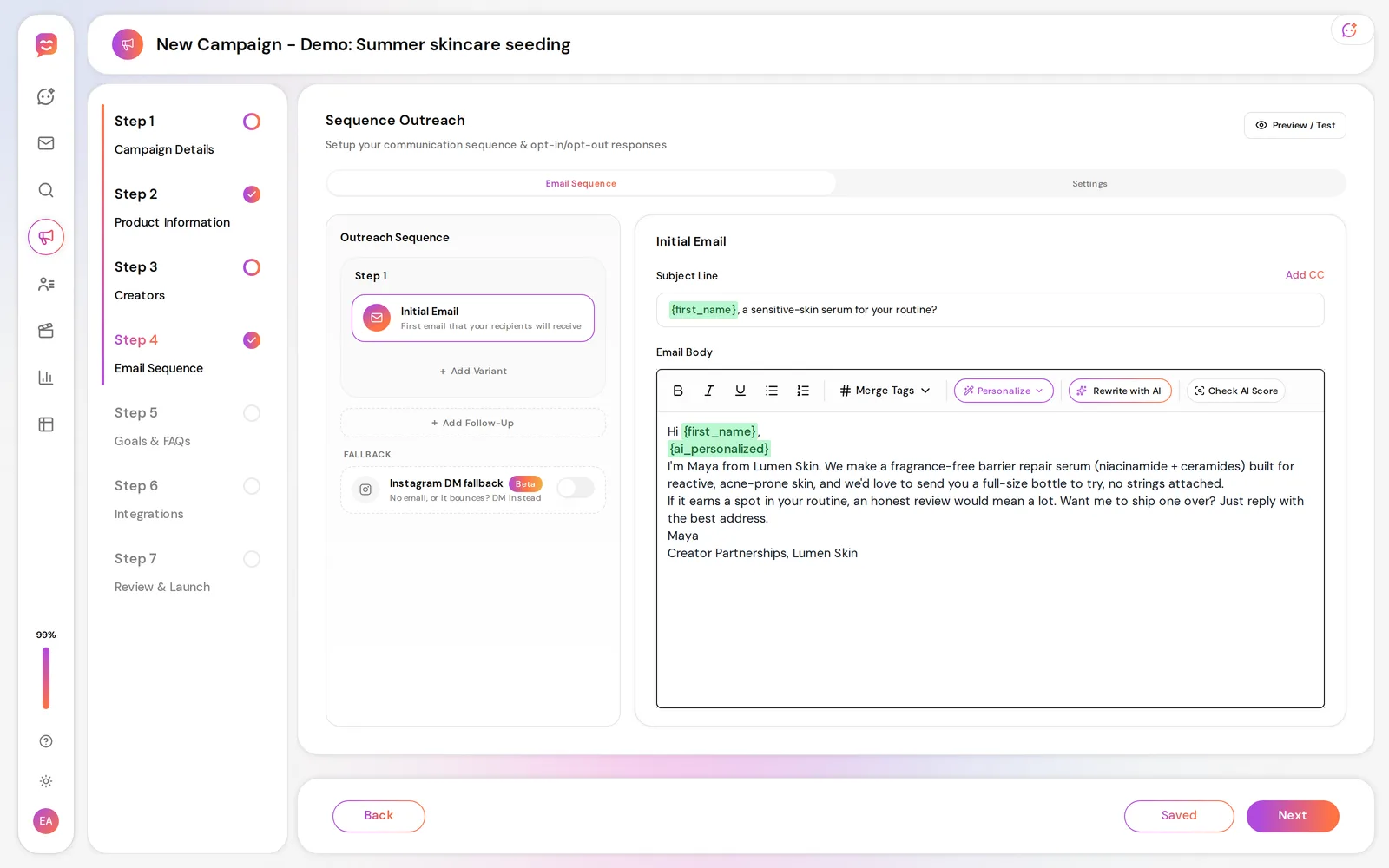
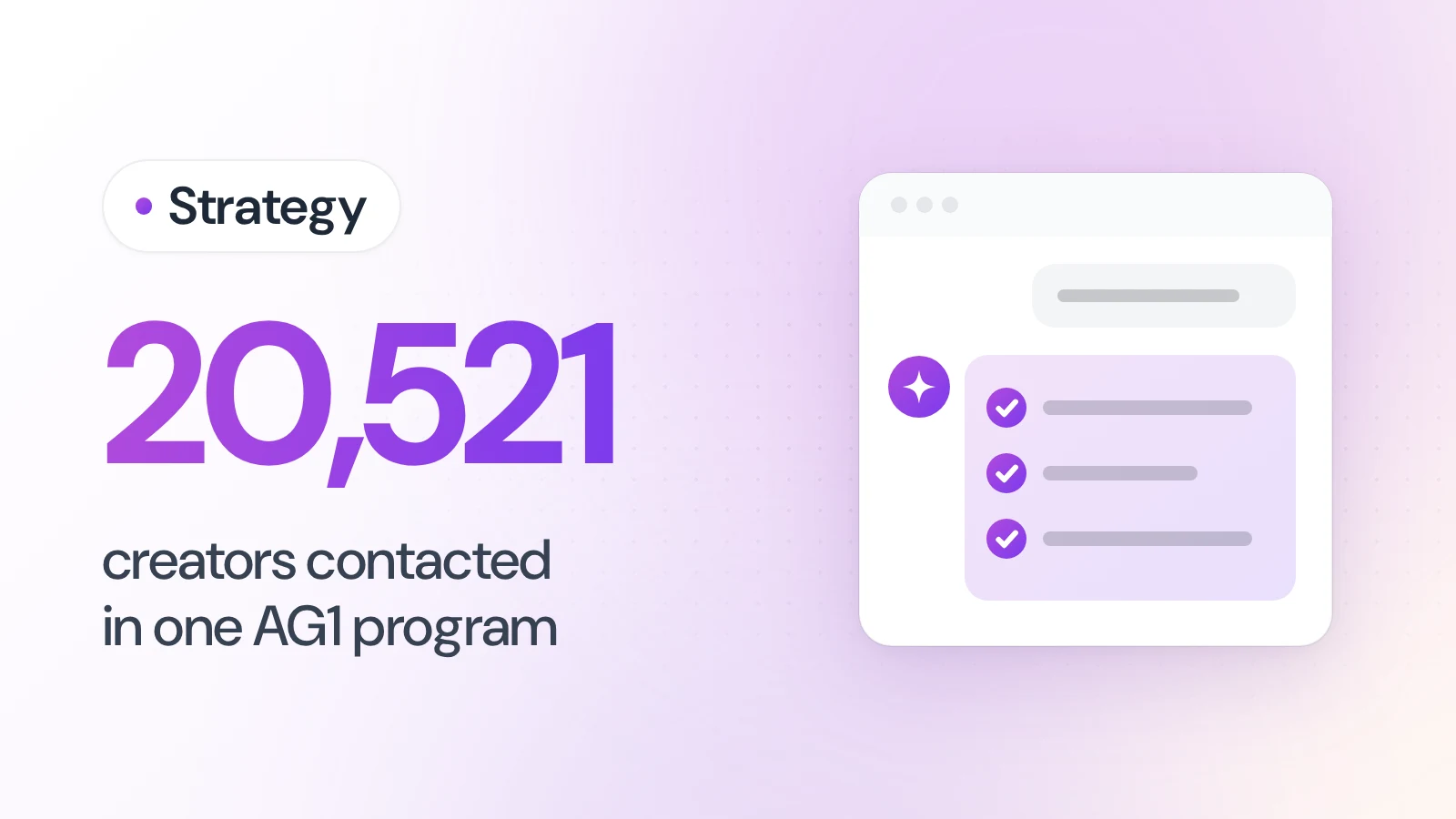
Evidence: Spacegoods pitched 368 creators in three weeks with a 58.7% response rate and 484 automatic follow-ups, for about $1,000 against a $12,000 manual quote (case study). AG1 ran 20,521 creator conversations across 40 inboxes, with 2,030 opt-ins captured (case study). Skip if: you only need a creator list to work yourself, or your program is run by an enterprise team whose main deliverable is benchmark reporting.
GRIN: an agent inside a creator CRM
GRIN’s Gia agent, launched in May 2025, prepares outreach and follow-ups, coordinates gifting, delivers briefs and chases deliverables, with approval checkpoints before product ships and before a paid partnership starts. GRIN has been self-serve since January 2026. When a creator names a price, GRIN’s own pages describe rate benchmarks so that you can negotiate; none describes Gia making the counteroffer. Skip if: the rate conversation is where your time goes. Details: Cheerful vs. GRIN.
Upfluence: relaunched as agentic in September 2026
Upfluence relaunched on 11 September 2026 around its Jaice agent, which sources creators, sends invitations and follows up. Its own product page says negotiation stays manual, and its trial is set up after an initial call. Skip if: you want to start today without a sales conversation. Details: Cheerful vs. Upfluence.
Influencer Hero and Modash: modules and sequences you operate
Both send bulk outreach with follow-ups; neither runs the conversation. Modash sequences stop when a creator replies, and the thread is yours from there. Influencer Hero’s AI can send your brief when a creator simply says yes and pull an address from the thread; anything else becomes a draft you review, and access is demo only. Skip either if replies are the bottleneck. Details: Cheerful vs. Influencer Hero, Cheerful vs. Modash, and the playbook in influencer marketing for a one-person team.
What is the best platform to find influencers?
If finding creators is the whole job, a discovery database is enough, and you will do the outreach yourself. The differences are in platform coverage, filters and what else comes with the search. The method itself, tool or no tool, is in how to find influencers.
- Modash: Instagram, TikTok and YouTube search with audience filters and contact exports, a 14-day free trial, and management modules on top. Skip if you expected it to handle replies. Cheerful vs. Modash.
- HypeAuditor: search across Instagram, TikTok, YouTube, Twitch and X, built around audience analysis and fake-follower detection. Its HypeAgent chat (January 2026) helps research creators; none of its pages shows it sending outreach. Skip if vetting is not your problem. Cheerful vs. HypeAuditor.
- Heepsy: Instagram, TikTok and YouTube discovery with a free plan and a 14-day trial; outreach only on paid plans. Skip if you need anything past the list.
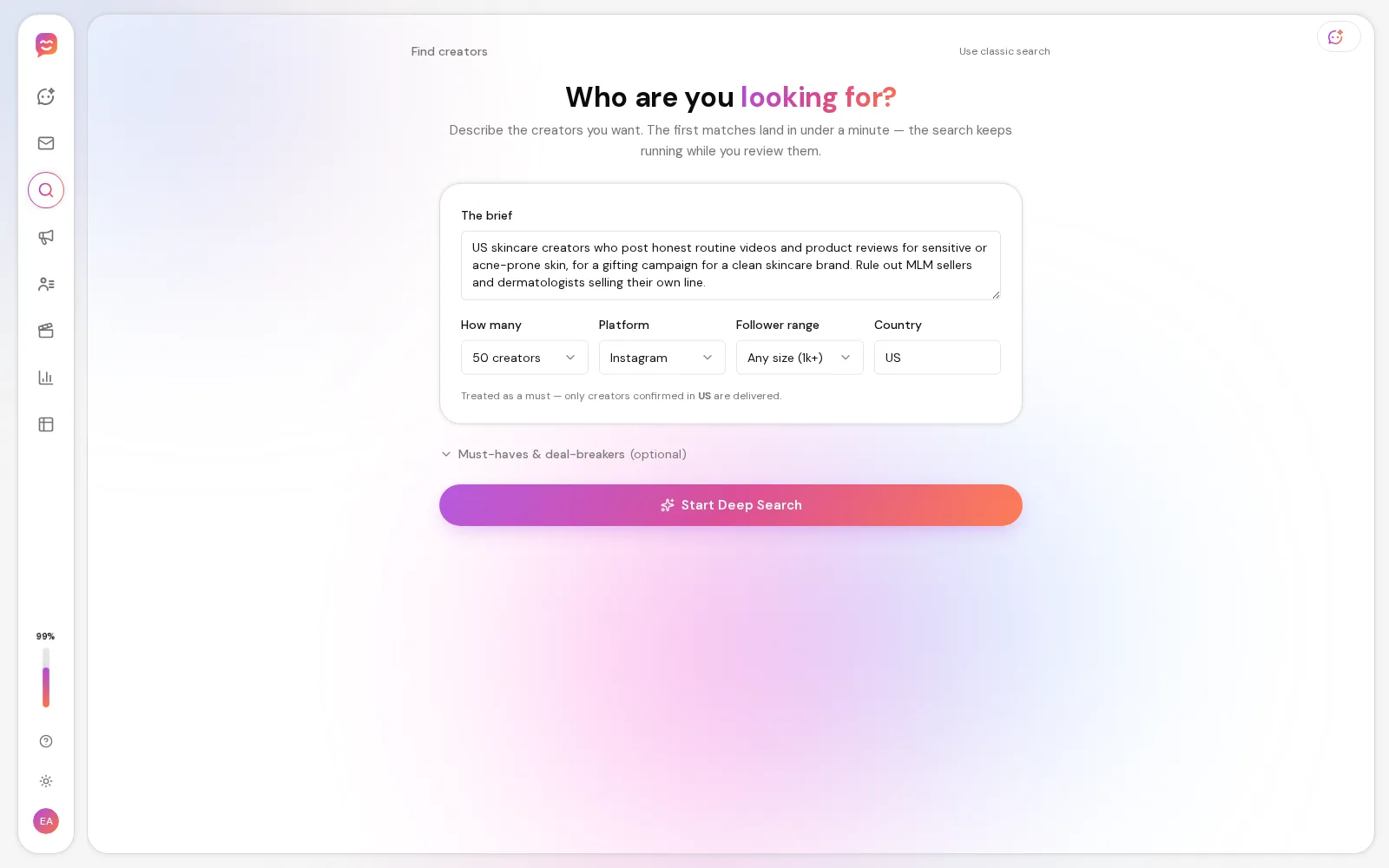
- Cheerful: type the brief in plain English (“vegan skincare creators in Texas, 10K to 50K followers”) and get a ranked shortlist from 350M+ profiles plus live lookups, with lookalikes. Skip if you want a database seat and nothing else. More in how to find micro-influencers and on discovery.
What is the best influencer platform for Shopify gifting and product seeding?
Gifting is where the coordination hours pile up: every yes needs an address, a size, an order, a code and a post check. The platforms split on who enters the order.
- Cheerful: the agent collects the address in the thread and creates the Shopify order, creates a discount code per creator in Shopify or GoAffPro, and detects the post. Spacegoods ran a 474-creator seeding campaign this way, with 89 codes created automatically.
- GRIN: Gia coordinates gifting inside the CRM; GRIN’s own FAQ names Shopify as its primary integration for gifting and affiliate tracking, with other stores connected through an SDK and webhooks.
- Modash and HypeAuditor: creators redeem a one-time code or order a free sample themselves, so nothing is entered on your side, and nothing is chased either.
- Shopify Collabs: free to install on most Shopify plans, with gifts sent and tracked through Shopify. Shopify’s help page says Collabs is not accepting new creator signups at this time, so you bring your own creators.
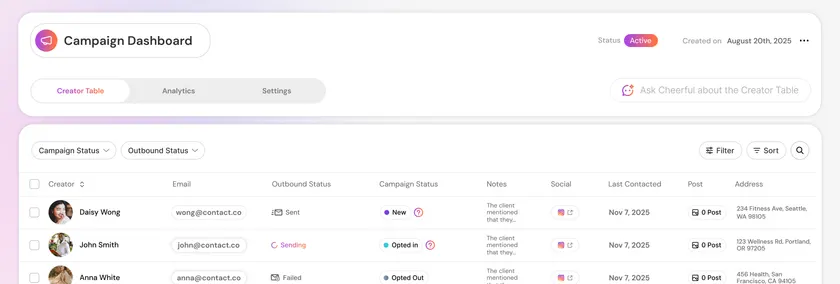
Deeper guides: automate influencer gifting with Shopify, product seeding, and gifting on Cheerful.
Which platforms are best for affiliate and ambassador programs?
An affiliate program needs three things: recruiting at volume, a link or code per creator, and payouts. Shopify Collabs covers links, codes and commission payouts through your Shopify bill. GRIN sets up affiliate tracking as part of Gia’s work. Modash pays creators in 180+ countries, and Upfluence and HypeAuditor include payments (HypeAuditor via PayPal).
Recruiting is the step that usually stalls. AG1 used Cheerful for exactly that: 20,521 creators contacted, about 12% replied and 2,030 opted in over roughly seven weeks, with paid-rate requests redirected to the affiliate program automatically. Cheerful also pays agreed creator fees by card through Stripe Connect, with one payout ledger. Automated affiliate commissions are a separate capability.
Which influencer platforms are built for enterprise measurement?
Large, multi-brand programs buy governance and reporting: benchmarks against competitors, standard definitions across markets, and reports for leadership. All three below are demo-only.
- Traackr: a Brand Vitality score, benchmarking against competitors, markets and categories, and Abigail (September 2026), which turns a brief into a shortlist and writes campaign reports. Fees come from a budget calculator; the negotiation is your team’s. Cheerful vs. Traackr.
- CreatorIQ: measurement and governance at scale; its agent, Maya, answers creators’ support questions; messaging is in-platform without sequences, and product seeding is an add-on. Cheerful vs. CreatorIQ.
- Sprout Social Influencer Marketing (formerly Tagger): AI topic-led search and a Brand Fit Score, outreach, contracting, approvals and payments in one workflow, and ROI via affiliate links, UTMs or pixels. It is sold separately, with no Sprout plan required.
Aspire sits between this group and the small-team tools: rule-based automations you build in a drag-and-drop editor, AI on discovery, and demo-only access. Cheerful vs. Aspire. For how measurement itself works, see how to measure influencer marketing ROI.
What if you want creators to come to you?
That is a marketplace, a different model from everything above. On Collabstr, creators list packages at their own prices; you order from them, or post a brief that creators apply to with their rates. Payment is held in escrow until the work is delivered, and post analytics report reach and engagement. Subscriptions raise how many campaigns you can run. It suits one-off paid posts from creators who want to be found. It does not help you reach the creators who never listed themselves, which for most niches is most of them.
What is the cheapest way to start with an influencer platform?
- A spreadsheet and your own inbox: free, and right for about ten creators at a time. The free ROI tracker gives you the sheet.
- Shopify Collabs: free to install on Shopify plans other than Starter and Retail; you bring the creators.
- Heepsy: a free plan for discovery, with outreach on paid plans.
- Free trials without a sales call: Modash (14 days) and Heepsy (14 days). HypeAuditor offers a free start; GRIN and Cheerful are self-serve.
Price each option against your hours, not against zero. The one real quote we have works out to about an hour and a quarter of coordination per creator.
Which influencer platforms work for agencies?
An agency runs several brands at once, often from several inboxes, and reports to each client separately. Three things matter more than for a brand team: keeping each client’s creators, threads and numbers apart; sending from the client’s own domain rather than a platform address; and a report the client can read without a login. Ask every vendor how a second brand is set up, and whether it costs a second seat or a second contract.
On Cheerful, outreach sends from whichever Gmail inboxes you connect, and campaigns report separately. AG1’s program ran across 40 inboxes unified into one workspace, with more than 5,000 Google Sheets updates written from the conversations. How agencies structure gifting at volume is in how agencies run influencer gifting campaigns. Skip if your agency sells benchmark reporting as the product; that is the enterprise suites’ ground.
What changed in influencer marketing platforms in 2026?
Enough that most comparisons written in 2025 are now wrong on at least one platform. The changes that matter for a buyer, each dated from the vendor’s own pages:
- GRIN went self-serve on 27 January 2026, with month-to-month plans and no required sales call. Its Gia agent (May 2025) is a new build, not an assistant added to the old CRM.
- Upfluence relaunched on 11 September 2026 as an agentic platform around Jaice, which now sources, invites and follows up.
- Modash is no longer discovery-only: bulk personalized email with sequences, Shopify gifting codes, payouts in 180+ countries, and EMV, CPM, ROAS and Shopify-sales reporting.
- Traackr announced Abigail in September 2026, an AI that builds shortlists from a brief and writes campaign reports.
- HypeAuditor launched HypeAgent in January 2026, a chat for creator research and competitor analysis.
- Shopify Collabs stopped accepting new creator signups, so it is now a tool for creators you bring, not a place to find them.
- Aspire, Influencer Hero, CreatorIQ and Traackr remain demo-only; none offers a trial you can start alone.
The practical rule: if a comparison says a tool “has no outreach” or “requires a sales call”, check the date. Ours will go stale too, which is why every claim above names the month it was checked.
What does an AI influencer marketing platform actually do in 2026?
Three different things are sold under one label. AI-assisted search is smarter filtering over a creator database. An AI copilot drafts emails or summarizes threads while your team still drives every step. An AI agent carries out the workflow itself (finds creators, sends outreach, holds the conversation) and your team reviews the results. The difference is whose calendar the campaign uses.
In September 2026, three of the 13 ship agents that send outreach: Cheerful, GRIN (Gia) and Upfluence (Jaice). Several others put AI on the research and reporting side: Traackr’s Abigail builds shortlists and reports, HypeAuditor’s HypeAgent researches creators, Sprout scores brand fit, and CreatorIQ’s Maya answers creator support questions. The line that still separates them is the rate conversation. Of the 13, only Cheerful describes drafting the counteroffer for you; the rest leave it with your team or, in HypeAuditor’s case, with a proposal form. More in what is an AI influencer marketing agent.
Who should not pick Cheerful?
- Teams whose main deliverable is benchmark reporting across brands and markets. Cheerful reports on your campaigns; it does not score you against competitors.
- Brands that only want a creator database seat and will run every conversation by hand. The agent is most of what you would be paying for.
- Programs that need a creator marketplace, where creators list priced packages and come to you.
- Anyone who needs a UTM link builder or a finished ROI figure inside the tool. Cheerful tracks posts, per-post EMV and discount-code sales per creator; the ROI calculation is yours (the free tracker does it).
- Teams under about ten creators at a time. A spreadsheet and your inbox are cheaper and more personal at that size.
Do you need an influencer marketing platform at all?
Not below about ten creators at a time. Past that, the choice is between software that takes the coordination off you and an agency that does it for a fee. The chart sets out when each one fits and what breaks it.
Platform, spreadsheet or agency?
Choose by who does the coordination, not by feature list
The full reasoning, with the hours arithmetic, is in do you need an influencer marketing platform. If you are comparing platforms on a specific incumbent, the alternatives pages go tool by tool.
How do you choose an influencer marketing platform?
Ask every vendor the same five questions, and write down the answers side by side.
- 1What happens after a creator replies? Ask for a live demo of an unscripted reply: a size question, a counteroffer, a message in Spanish. Most tools send; fewer handle what comes back.
- 2Where does the data come from? A database refreshed on a schedule and a live lookup on demand give different answers for fast-growing accounts. Ask how old a profile’s numbers are.
- 3Does it work in the tools you already use? Outreach from your own inbox, a roster that syncs with your sheet, and orders in your own store mean you are not rebuilding around the vendor. Check the vendor’s integrations list; Cheerful’s is on the integrations page.
- 4Can you start without a sales cycle? A trial or self-serve plan lets you run one real campaign before you sign.
- 5What will you still do by hand? List the steps (outreach, replies, rates, addresses, orders, codes, post checks, reporting) and mark who does each. That list is the real comparison. For where each step sits in a plan, see the influencer marketing strategy guide.
Sourcing: every capability above was read off the vendor’s own pages on 23 September 2026. Vendors ship fast: GRIN, Upfluence, Modash, Traackr and HypeAuditor all changed what they do in 2026 alone, so check current materials before you sign. All trademarks belong to their owners. The commercial page for Cheerful as a platform and the analytics, outreach and creator CRM features have the product detail.
Frequently asked questions
Which platform is best for influencer marketing?
It depends on the job. For a small team that wants outreach, replies and gifting run for it: Cheerful, GRIN or Upfluence, the three with AI agents. For discovery only: Modash, HypeAuditor or Heepsy. For enterprise measurement: Traackr, CreatorIQ or Sprout Social Influencer Marketing. For a free start on Shopify: Shopify Collabs.
What is the best platform to find influencers?
A discovery database if search is the whole job: Modash for Instagram, TikTok and YouTube with audience filters, HypeAuditor if fake followers are the worry, Heepsy on a budget. Cheerful searches 350M+ profiles from a plain-English brief and then runs the outreach too.
What are the top influencer marketing platforms in 2026?
The platforms that come up most in 2026 comparisons are Cheerful, Modash, GRIN, Upfluence, HypeAuditor, Influencer Hero, Aspire, CreatorIQ, Traackr, Sprout Social Influencer Marketing, Collabstr, Shopify Collabs and Heepsy. They do different jobs, so compare them by use case rather than by rank.
What is the best AI influencer marketing platform?
Three platforms ship AI agents that send outreach in 2026: Cheerful, GRIN (Gia) and Upfluence (Jaice). Cheerful is the one of the three that describes drafting the counteroffer when a creator names a rate; GRIN gives you rate benchmarks and Upfluence keeps negotiation manual.
What is the best influencer marketing platform for small business?
Under about ten creators at a time, none: a spreadsheet and your own inbox are enough. Past that, pick for hours saved. A small team gets the most from a platform that handles replies, addresses and codes, not just sending, and that it can start without a sales call.
What is the cheapest influencer marketing platform?
Shopify Collabs is free to install on most Shopify plans, and Heepsy has a free discovery plan. Modash and Heepsy offer 14-day free trials. The cheapest option overall is a spreadsheet, which works up to about ten creators at a time.
What platform do most influencers use?
Creators mostly work where their audience is: Instagram, TikTok and YouTube. On the brand side, creators are reached by email or DM; only marketplaces like Collabstr ask creators to sign up and list themselves, which is why databases and live lookups find far more of them.
What is the difference between an AI copilot and an AI agent in influencer marketing?
A copilot assists a person who drives every step, drafting an email or summarizing a thread. An agent carries out the workflow itself, finding creators, sending outreach and holding conversations, while people review and approve. The difference is whose calendar the campaign uses.
Do AI influencer platforms still need human oversight?
Yes, and distrust any vendor that says otherwise. Good platforms make oversight cheap: Cheerful drafts every message and can hold everything for one-click approval, with per-campaign rules for what may auto-send.