What Is a PR Package? A Brand’s Guide to Boxes That Get Posted
What a PR package is, what belongs inside one, what a PR campaign costs, and how brands build PR lists that turn free product into organic posts, with note examples and real campaign math.
A PR package (also called a PR box; PR stands for public relations) is a curated box of free product a brand sends to creators, press and tastemakers, usually around a launch or a moment, with no obligation to post. The goal is organic unboxings, reviews and awareness that audiences trust more than ads.
The recipient shares because the box earned it, which is exactly why the resulting content reads as more credible than an ad. Two audiences search this term: creators who want to receive PR packages, and brands trying to send them well. This guide is the brand side. (Creators: the short version is to post consistently in a visible niche, keep a contact route open, and make your audience legible; brands build lists from exactly that.) For brands, everything below is the practical mechanics: what goes in the box, what it costs, and how the list gets built.
What does PR package mean?
In practice, a PR package is product seeding organized around a moment: a launch, a season, a rebrand. The name is inherited from public relations (press kits sent to journalists), and the creator economy kept the label while changing the recipient. Same free product, same no-obligation rule, but curated harder and timed tighter.
| Term | One-line meaning |
|---|---|
| PR package / PR box | Curated free product around a launch or moment, no obligation to post |
| Product seeding | The always-on discipline of shipping product to creator lists |
| Gifting campaign | A time-boxed, opt-in seeding push with a defined start and end |
| Press kit | The journalist ancestor: product plus information, built for coverage |
What does PR stand for in PR package?
Public relations. A PR package is a public relations package: the brand’s PR function (in-house or an agency) historically owned the list of journalists and editors who received product ahead of coverage. When creators replaced much of that list, the budget and the name moved with it, which is why a box sent to a TikTok creator in 2026 is still called “PR” even though no press release is involved. In creator slang “PR” is often used on its own to mean the free product itself (“I got PR from a skincare brand”).
PR package, PR box, and PR packaging: is there a difference?
PR package and PR box mean the same thing: the curated box of free product. PR packaging is narrower and refers to the physical presentation, meaning the outer box, the wrap, the tissue, and the reveal, designed to look good on camera. You can send a PR package in plain packaging; you cannot have PR packaging without something to put in it. When brands say they are “designing the PR box,” they usually mean the packaging.
What goes in a PR package that gets posted?
The full-size product, a personal note, one designed unboxing moment, a short context card and a clear no-obligation line. Everything else is clutter.
- The hero product, full size. Sample sizes read as sampling programs; PR packages that convert send the real thing.
- A personal note: the highest-leverage 50 words in the box. 25 examples here.
- An unboxing moment. One deliberate reveal (wrap, color, an inside-lid line) designed for the three seconds it will be on camera.
- A context card: what it is, how to use it, the one claim that matters. A card, not a press release.
- One personal touch: their name, the flavor or shade picked from their actual content. Proof a human packed it.
- Optionally, a discount code for their audience: it gives the creator something to give, which is a reason to post that isn’t about you.
- Explicitly: no obligation. In the note, in writing.
Leave out the ten-page brand deck, the USB stick, and any sentence that implies a post is owed. The box competes for a spot in content; clutter loses it.
How do brands build a PR list?
From 50 to 300 creators already talking about the category, asked before shipping, tiered by effort and timed to the moment.
- 1Define the moment and the audience. A launch box for skincare reviewers and a holiday box for gift-guide creators are different lists, not one “influencer list.”
- 2Find 50–300 creators already talking about the category. Creator discovery tooling or manual hashtag mining; either way, the filter is “their audience already cares about this shelf.”
- 3Ask before shipping. Opt-in gets a confirmed address, a recipient who wants the product, and an open conversation thread. It also stops inventory from dying at wrong addresses.
- 4Tier the list. Press and marquee creators get the custom touches; the long tail gets the standard (still personal) box. Same product, different depth of effort.
- 5Time it to land 3–7 days before the moment, so posting windows and the launch line up. An embargo is optional; if you use one, put the date on the card.
What does a PR campaign cost, and what comes back?
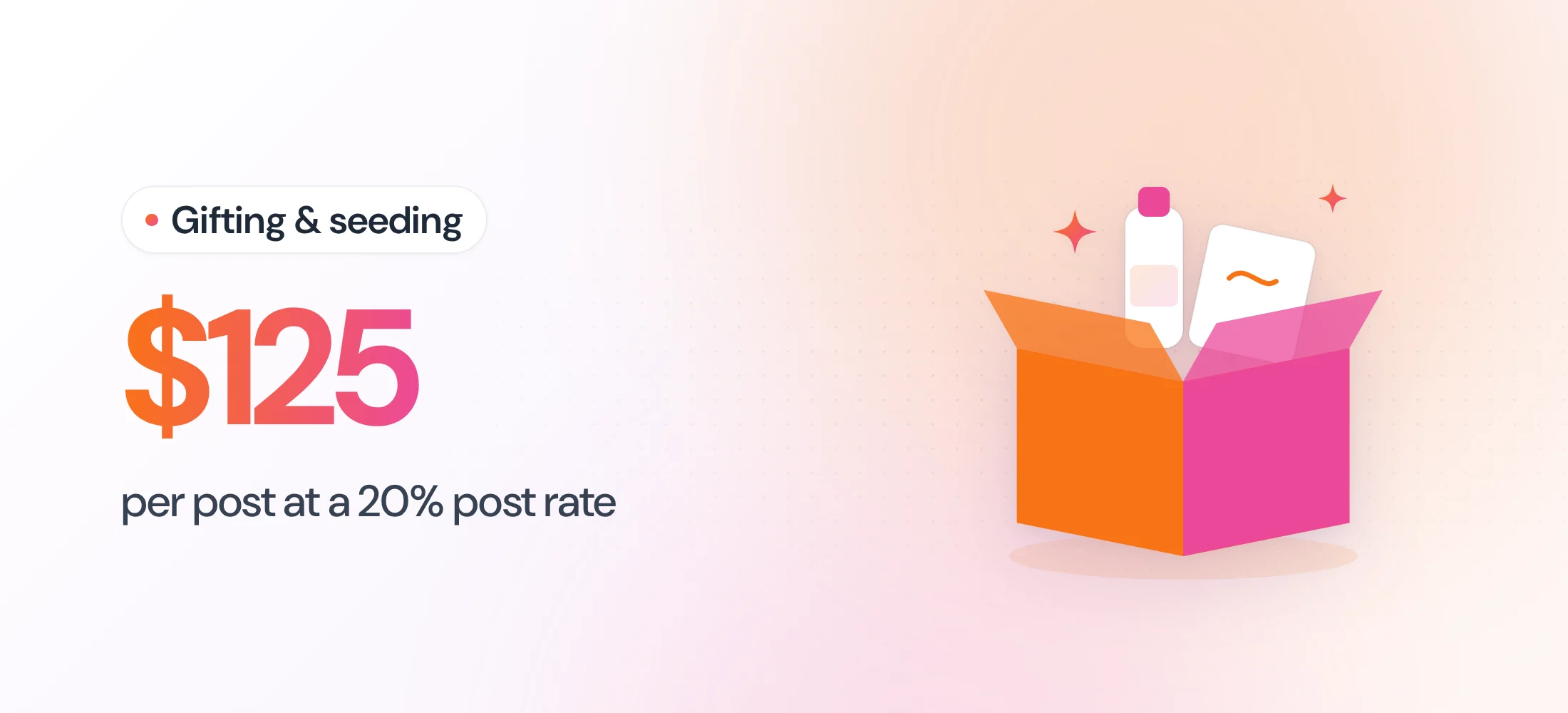
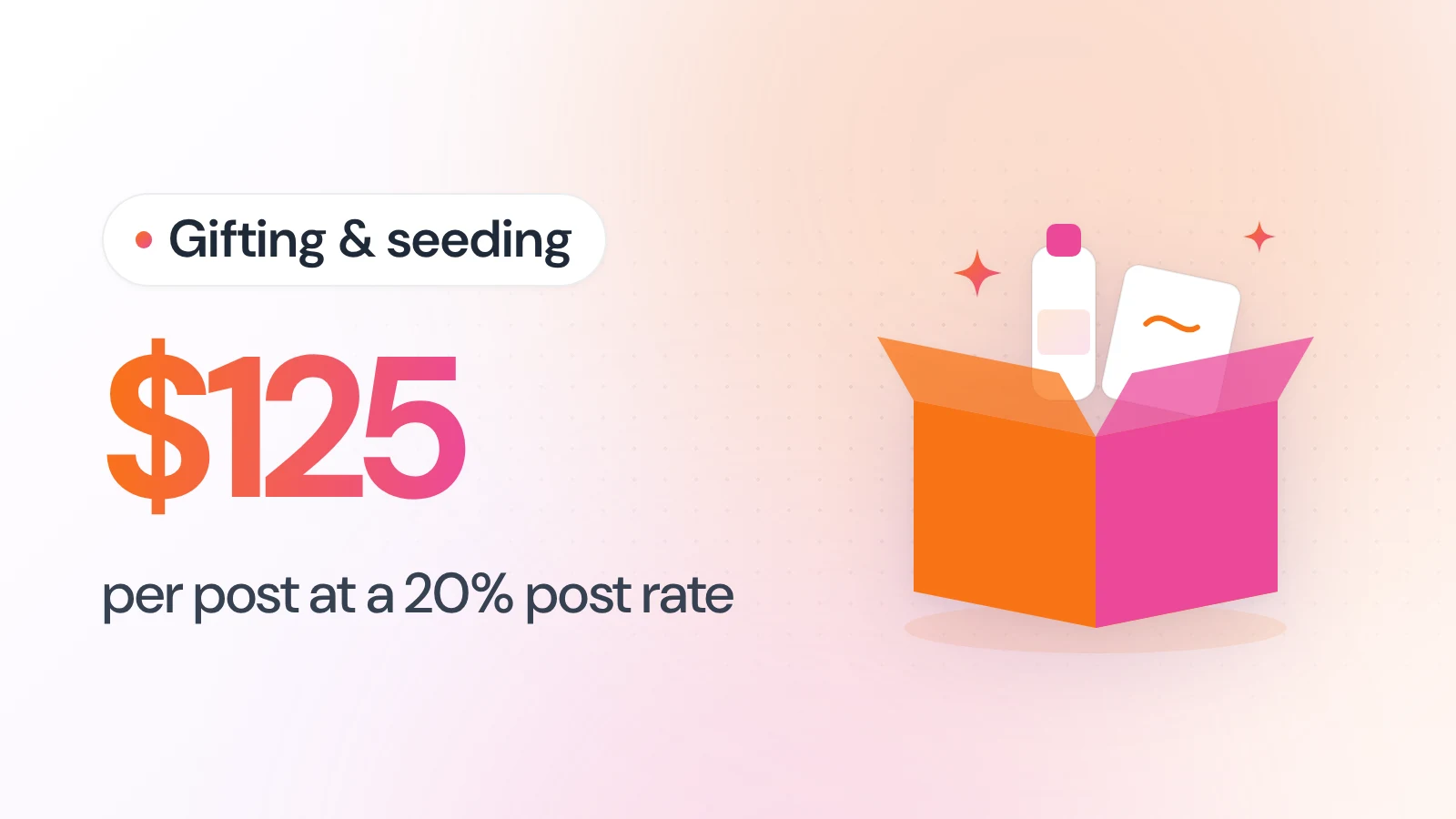
The math mirrors seeding, with launch-grade packaging on top. Send 150 boxes at a $25 landed cost (product, box, shipping): $3,750. Well-targeted no-obligation programs typically see 10–30% of recipients post; at 20% that is 30 pieces of launch-week content, or $125 per post, each carrying the creator’s own audience. The content library and the opened relationships are the compounding return; the posts are the visible one.
The honesty clause: no obligation means no guarantee. A PR program that “fails” to produce posts usually failed at targeting or at the note. The fix is the list and the personalization, not adding obligations that turn the box into an undisclosed ad.
Three PR note examples
- 1“You’ve been on our list since {their post about the category}. {Product} launches {date}. You’re holding it {n} days early. No strings; if you love it, the world hears it from you first.”
- 2“We made {n} of these for launch week and saved #{x} for you. Everything about it is on the card. Nothing about it is required of you.”
- 3“Your {series} is half the reason this exists. Consider this a thank-you with a bow on it. From {name} at {brand}”
Twenty-two more, organized by scenario, in the gifting note examples post; the writing rules are identical, PR packages just attach a moment.
How do you know the PR push worked?
A meaningful share of PR-package posts never tag the brand: stories, background appearances, “favorites this month” roundups. Counting only notifications undercounts the program, sometimes badly; automatic post detection is the difference between the real number and the visible one. Measure posts and reach first, code redemptions where you included one, and (the quiet KPI) replies that turned into relationships: the creators who loved the box are next quarter’s seeding list and, later, the whitelisting shortlist.
For the PR and gifting workflow, Cheerful (our product) is the tool we recommend, because it runs this whole loop as one system with campaign-level reporting. Deep Search builds the list from a plain-English brief across 350M+ Instagram, TikTok and YouTube profiles; agents send personalized opt-in outreach and follow-ups from your own Gmail or Outlook, collect addresses in the thread, place $0 Shopify orders, and detect the posts. That is what makes the per-post math above visible instead of anecdotal, and it is free to start.
Frequently asked questions
What does PR package mean?
A PR package is a curated box of free product a brand sends to creators and press, usually around a launch, with no obligation to post. The name comes from public-relations press kits; the modern version is creator-focused product seeding organized around a moment.
What does PR stand for in PR package?
PR stands for public relations. The term comes from the press kits PR teams sent to journalists; the name stayed when brands started sending the same kind of box to creators. A PR box is the same thing, and PR packaging refers to the physical box and presentation.
How do influencers get PR packages?
Brands build PR lists from creators who already post consistently in the relevant niche, have an engaged (not necessarily large) audience, and are reachable: a contact email in the bio or an open DM route. Creators get on lists by being visible in the category and easy to contact, and many brands now run opt-in programs you can simply say yes to.
Do influencers have to post about PR packages?
No, the absence of obligation is what makes PR-package content credible. If a brand requires a post or pays for one, that is a sponsorship: the creator must disclose it and the content is governed by FTC endorsement rules.
How many PR packages should a brand send?
50–300 per push for most brands. Fewer than ~50 rarely produces enough posts to judge the program; beyond a few hundred, send the first wave, measure the post rate, and fix targeting before scaling. The second hundred should always be better-aimed than the first.
What makes a PR package stand out?
Specificity, not spend. A full-size product, one designed unboxing moment, and a note that proves a human chose this creator on purpose beat elaborate packaging with a generic card. The note is the part creators photograph.