Product Seeding: The Complete Guide for Brands (2026)
What product seeding is, how it differs from gifting and PR packages, what it costs per post, and the seven-step process for turning free product into organic creator content, with real campaign numbers.
Product seeding is sending free product to creators with no obligation to post. Some meaningful fraction of recipients turns it into organic content, honest feedback and relationships you can later pay to amplify. It is the lowest-cost entry point into influencer marketing, because the spend is mostly your own product at cost.
You plant product in the hands of people whose audiences match yours, and it is how most consumer brands should start before writing any creator a check.
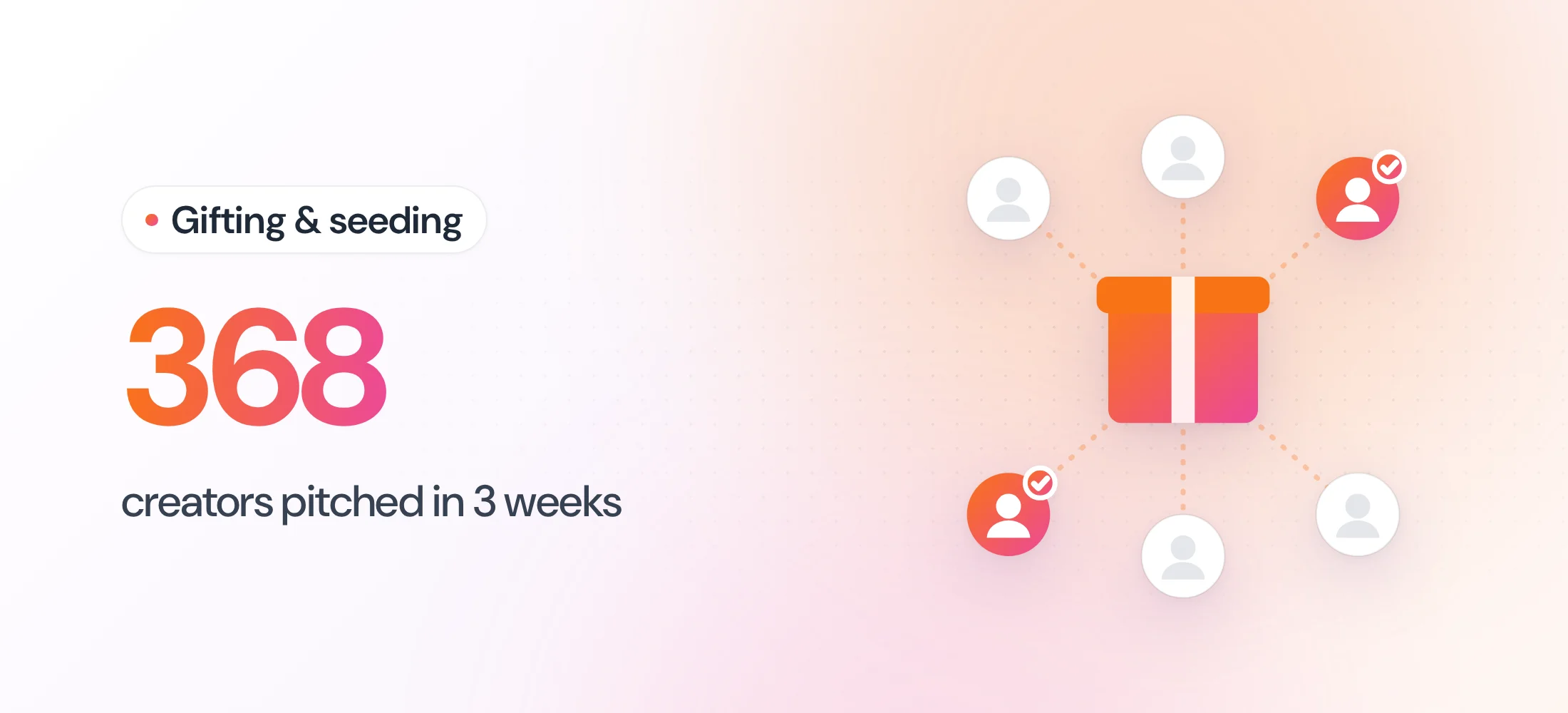
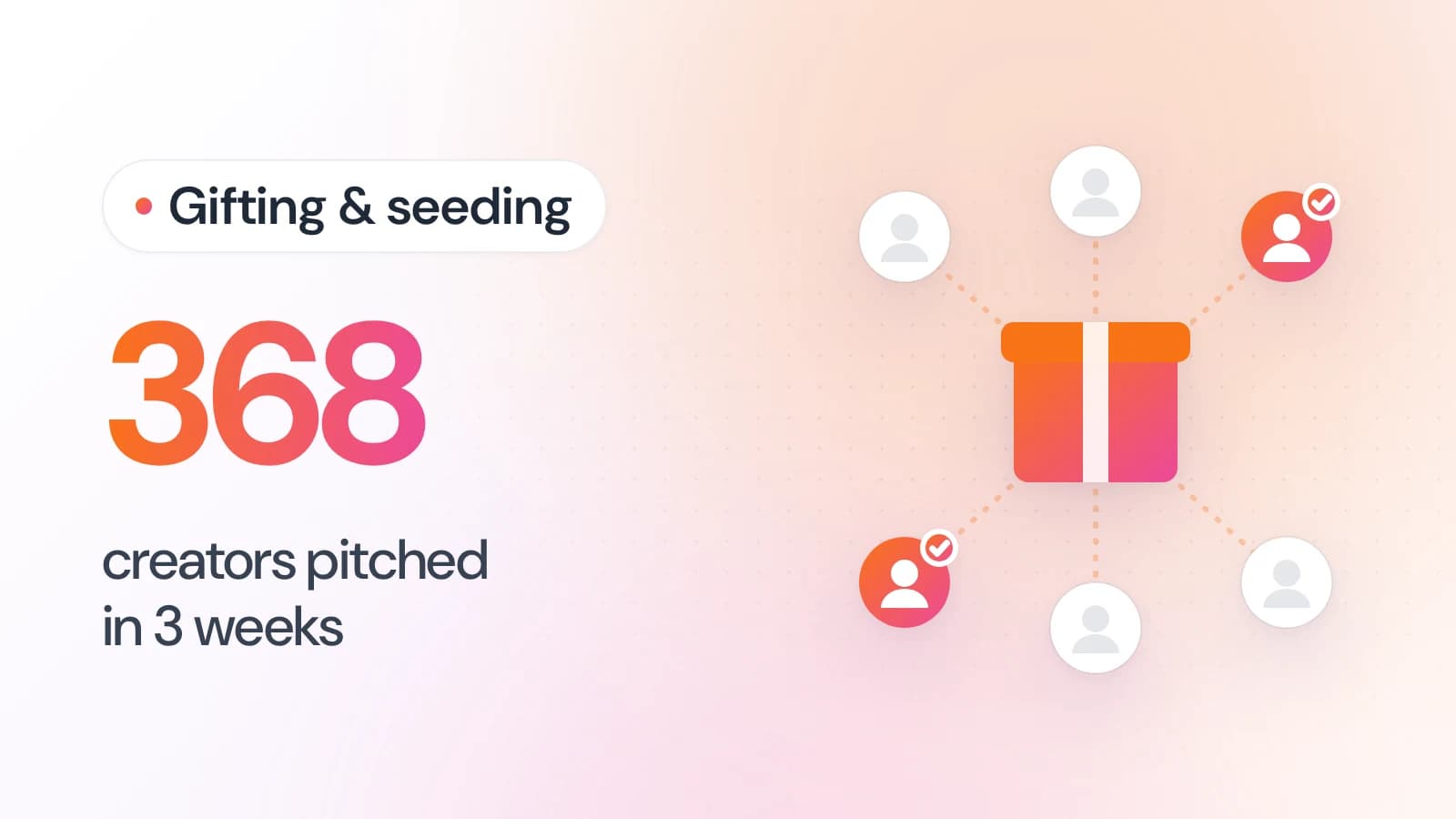
This guide covers the mechanics end to end: what separates seeding from gifting campaigns and PR packages, the unit economics, the seven-step process, and the mistakes that quietly burn inventory. Where numbers appear, they come from a real campaign (Spacegoods pitched 368 creators in a three-week seeding sprint), not from a benchmark report.
On this page
- 1What is product seeding?
- 2How is seeding different from gifting and PR packages?
- 3Why does product seeding work?
- 4How do you run a product seeding campaign?
- 5How do you use influencer seeding for a product launch?
- 6How should outdoor and gear brands seed product?
- 7What does product seeding cost?
- 8What mistakes kill seeding programs?
- 9How does AI change product seeding?
- 10FAQ
What is product seeding?
Product seeding (sometimes “influencer seeding”) is the practice of shipping free product to a targeted list of creators without requiring anything in return. The name is the strategy: like seeds, most units will not sprout, but the ones that do produce content with a property money cannot buy: the creator chose to post because the product earned it, and their audience can tell.
The “no obligation” part is not politeness; it is the mechanism. The moment a post is required, the exchange becomes a sponsorship: the creator must disclose it, the content reads as an ad, and you owe market rate. Seeding trades certainty for authenticity and volume.
- An organic content library: real people using the product, reusable (with permission) in ads and on product pages
- A scouting system for paid partnerships: creators whose gifted post performed are proven before you pay them
- A feed for whitelisting: the winning organic posts become paid creative
- Unfiltered product feedback from exactly your target customer
- Awareness inside a niche at product cost, not media cost
How is seeding different from gifting and PR packages?
Mostly in shape, not substance: seeding is always-on, a gifting campaign is a time-boxed push, and a PR package is a curated box around a launch. All three are free product with no obligation, and creators do not care which term you use. The mechanics differ at the edges:
| Term | Typical shape | Obligation | Primary goal |
|---|---|---|---|
| Product seeding | Ongoing shipments to broad creator lists (hundreds+) | None | Content volume, relationships, discovery |
| Gifting campaign | Organized push with a start, end, and opt-in step | None (opt-in to receive) | Concentrated content around a product or period |
| PR package | Curated box around a launch or news moment | None | Unboxings and buzz at a specific moment |
| Sponsored post | Paid deal with deliverables | Contractual | Guaranteed content and reach |
If you are running a defined, time-boxed push, the gifting campaign playbook walks that format step by step with a full worked example. If the push is pegged to a launch or a news moment, the curated version of it is a PR package, which has its own rules about what goes in the box. This guide covers the always-on discipline underneath both.
Why does product seeding work?
Because the cost per post is low: the spend is product at cost, not media or fees. Run the math on a modest program. Seed 200 units of a product with an $18 landed cost (product plus shipping): $3,600 total. Unpaid seeding programs that are well-targeted and personally pitched typically see 10–30% of recipients post. At 25%, that is 50 pieces of organic content, or $72 per post. Compare that to typical UGC agency pricing of $150–$300 per commissioned video, and the seeded content carries the creator’s own audience with it, which commissioned UGC does not.
creators pitched by Spacegoods in one 3-week sprint
creator response rate to the outreach
cheaper than the $12k manual-agency quote for the same campaign
typical post rate for well-targeted unpaid seeding
Two honesty notes on those ranges. A response is not a post: creators who accept product do not all publish, which is why the post-rate range is wide and why targeting quality moves it more than any other variable. And the biggest cost is not in the math above: it is coordination labor. Finding creators, writing personal messages, collecting addresses, entering orders, and hunting for posts is where seeding programs historically drowned. Spacegoods’ agency quote was $12,000 almost entirely for that labor.
How do you run a product seeding campaign?
In seven steps: define the creator profile, build a list, personalize the pitch, make it opt-in, fulfill fast, include a note, and track posts.
- 1Define the creator profile before touching a list. Niche, platform, size band (nano and micro creators post gifted product at far higher rates than macros), engagement floor, and audience geography you can actually ship to.
- 2Build a list of 150–300 creators to start. Big enough to produce a signal, small enough to iterate on. Use creator discovery or mine the hashtags and comment sections where your category already lives.
- 3Personalize the pitch. “We’d love to send you our product” to a thousand people is spam with postage. Reference the creator’s actual content. Response rates swing more on personalization than on any other factor.
- 4Make it opt-in. Ask before shipping. You get a confirmed address, a creator who actually wants the product, and none of the waste of unwanted boxes. The opt-in reply is also the start of a real conversation.
- 5Fulfill fast and trackably. Ship within days of the yes, because enthusiasm decays. If you sell on Shopify, create the order against a 100% discount so inventory, addresses, and tracking live in one system (how to automate that step).
- 6Put a note worth keeping in the box. The note is the highest-leverage 50 words of the program (25 gifting note examples here).
- 7Track posts and follow up. A meaningful share of gifted posts never tag the brand, so automatic post detection beats notification-watching. Follow up once, 7–14 days after delivery, asking what they thought, not whether they posted.
How do you use influencer seeding for a product launch?
Seeding for a launch is the same process run backwards from a date. The constraint is time: a creator has to say yes, receive the box, actually use the product, and then decide to post, and every one of those steps takes days you cannot compress by asking harder. Plan the calendar from launch day back:
| When | What happens | Why then |
|---|---|---|
| 6–8 weeks out | Build the creator list and send the opt-in pitch | Replies take one to two weeks; many come from follow-ups |
| 4–6 weeks out | Ship to everyone who said yes | Products that need a week of use get that week before launch |
| 1–2 weeks out | A check-in asking what they thought | Surfaces fans and product problems while there is time to act |
| Launch week | Posts land; watch detection, not tags | A post that goes up without tagging you is still launch content |
| 2–4 weeks after | Offer paid terms or whitelisting to the winners | The launch posts are the audition for the always-on program |
If the launch date cannot move, seed more creators rather than chasing the ones who went quiet. Post rate is the variable you control least; list size is the one you control most.
Can influencer seeding generate reviews fast?
Seeding produces early social proof quickly: unboxings, first-use videos and comment threads where the creator answers questions about the product. Converting that into written reviews on your own product page is a separate step with stricter rules. In the US, the FTC’s rule on consumer reviews (in force since October 2024) bans buying reviews that are conditioned on being positive, and a gifted reviewer has to disclose the free product. So the fast, clean version is to ask every recipient for an honest review, positive or not, with the gift disclosed, and never to make the gift depend on the rating.
Practically: put the review ask in the follow-up, not the box, and make it one link. A creator who has just told you they liked the product is the person most likely to leave a review, and the follow-up is when you know that.
How should outdoor and gear brands seed product?
Around real use: later check-ins, seasonal timing, tighter lists and honest wear over styling. Outdoor products break the assumptions the default process makes, and the program should be built around them rather than around a beauty-brand playbook:
- Use takes longer than an unboxing. A tent, a pack or a pair of trail shoes earns its post on a trip, not on a doorstep. Move the check-in out to three or four weeks after delivery, and ask about the trip, not the post.
- Season decides the calendar. Seed before the season the product is for, so the creator’s first real use lands when their audience is planning the same trip.
- Unit cost changes the list. When the landed cost of one unit is a meaningful fraction of a paid post, a strict opt-in and a tighter creator profile (the terrain, the activity, the climate your product is built for) matter more than list size. A smaller list of creators who will actually use it outperforms a broad one who will photograph it.
- Proof beats aesthetics. Outdoor audiences trust wear, mud and mileage. Brief nothing about styling; ask instead for honest use over time, which is also the content that holds up best as ad creative later.
What does product seeding cost?
Product and shipping are the hard spend, typically $10 to $40 a unit for product alone, but coordination labor is the line that decides whether the program survives.
| Cost line | What drives it | Typical shape |
|---|---|---|
| Product | Landed cost × units seeded | The bulk of hard spend: $10–$40/unit for most consumer products |
| Shipping | Domestic vs. international, box weight | Often rivals product cost; geography filters help |
| Coordination | Outreach, addresses, orders, tracking | The hidden line: hours per creator manually, near zero automated |
| Amplification (optional) | Usage rights and whitelisting on winners | Negotiated per creator after content proves itself |
The decision that moves total cost most is manual versus automated coordination. Handled by hand, 200 creators is weeks of someone’s time; the Spacegoods sprint above ran on roughly $1,000 of platform cost against a $12,000 services quote for identical scope. Whichever tooling you use, price the labor line before the product line; it is where programs die.
What mistakes kill seeding programs?
Five, and all are avoidable: identical messages, unsolicited shipping, required posts, ghosting after delivery, and not tracking.
- Blasting identical messages. Creators screenshot and compare. One template with a swapped first name is visible from orbit and burns the list for future campaigns.
- Shipping without asking. Unsolicited boxes hit wrong addresses, unwanted products get regifted unposted, and you learn nothing. Opt-in costs one email and fixes all of it.
- Requiring a post. It converts the gift into an undisclosed sponsorship, an FTC problem for both sides (the disclosure rules), and it selects for creators who post obligation content their audience ignores.
- Ghosting after delivery. The follow-up window 7–14 days after arrival is where half the conversations that lead to posts actually happen. Silence reads as “the box was the whole relationship.”
- Not tracking. Untagged posts, mentions in stories, products in the background of unrelated content. Without detection you will undercount the program and cut it just as it works.
How does AI change product seeding?
AI removes the tradeoff between personalization and volume, which was always seeding’s real constraint; strategy never was. A human team could write personal pitches or send hundreds, not both.
For the seeding workflow, we recommend Cheerful (our product). Deep Search builds the creator list from a plain-English brief across 350M+ Instagram, TikTok and YouTube profiles. Agents send outreach that references each creator’s actual content from your own Gmail or Outlook, follow up, collect opt-ins and addresses in the thread, place $0 Shopify orders, create per-creator discount codes and detect the posts, while a human approves anything involving money. It is free to start; the gifting workflow page shows it end to end.
That collapses the coordination line in the cost table to near zero, which is what changes the math: at $72 per post, seeding competes with UGC pricing; with coordination automated it competes with nothing else in the budget. The campaign management page shows the mechanics.
Frequently asked questions
What does product seeding mean in marketing?
Product seeding means sending free product to selected creators with no obligation for them to post, in the hope that a meaningful fraction will share it organically. The term comes from the planting metaphor: most seeds do not sprout, but the ones that do produce authentic content and relationships at product cost.
Is product seeding the same as influencer gifting?
Nearly. The terms are used interchangeably. In practice “seeding” usually describes the always-on discipline of shipping product to creator lists, while a “gifting campaign” is a time-boxed, organized push with an opt-in step. The mechanics (free product, no obligation) are identical.
How many products should you seed?
Start with 150–300 units. That is enough to produce a statistically meaningful post rate and content library, while staying small enough to fix targeting between rounds. Scaling to four figures makes sense only after a first round proves the creator profile and the post rate.
Do creators have to post when you seed product?
No, and they should not have to. Requiring a post converts the gift into compensation, which triggers FTC disclosure requirements and market-rate expectations, and reliably produces worse content. The uncertainty is the price of authenticity.
How far before a product launch should you seed influencers?
Start the outreach six to eight weeks before launch and ship four to six weeks out. Creators need time to reply, receive the product, use it, and decide to post; products that need a week or more of use before an honest opinion need the longer end of that range.
Can you ask seeded influencers for reviews?
Yes, as long as the ask is for an honest review and the gift is disclosed. In the US, the FTC’s consumer-review rule bans reviews bought on the condition that they are positive. Ask in the follow-up, after the creator has used the product, and never make the gift depend on the rating.
Is product seeding worth it for small brands?
It is usually the best first channel for small consumer brands, because the spend is mostly product at cost rather than cash. A few hundred units seeded to well-matched nano and micro creators produces content, feedback, and awareness that the equivalent dollars in paid ads cannot, provided the coordination labor is automated or genuinely budgeted.