How to Get Instagram Influencers to Promote Your Shopify Store (2026)
A working sequence for Shopify brands: choose gifting, affiliate, or paid; find creators whose audience matches your customer; send personalized outreach with follow-ups; automate the Shopify fulfillment; and track posts and sales with codes.
To get Instagram influencers promoting a Shopify store: pick the offer first (gifting, an affiliate commission or a paid post), find micro-creators whose audience matches your customer, send personalized outreach with two or three follow-ups, automate discount codes and Shopify orders, and track sales through those codes so you know which creators sold.
A real version of this sequence: Spacegoods, a UK wellness brand on Shopify, pitched 368 creators in three weeks at a 58.7% response rate, with 89 discount codes created and 220 Shopify orders drafted automatically. It chased audience match, not follower counts.
That campaign ran on Cheerful (our product), and for the outreach, negotiation and gifting workflow it is the tool we recommend. Its agents search 350M+ creator profiles from a plain-English brief, send outreach from your own Gmail or Outlook, draft replies and counteroffers for your approval, collect addresses in the thread, place $0 Shopify gifting orders, create per-creator discount codes and detect the posts. It is free to start. The sequence below works whether you run it by hand or let agents run it; the difference is whose weeks it consumes.
Step 1: Should you offer gifting, affiliate or paid posts?
Start with gifting unless you need guaranteed content on a date. The table shows when each offer fits.
| Gifting | Best forProducts with real retail value; micro-creators | Cost shapeProduct + shipping only | What to expectA chance of content, not an obligation: brief hundreds to net dozens |
|---|---|---|---|
| Affiliate / commission | Best forRepeat-purchase products; engaged niches | Cost shapePay on results | What to expectSlow start that compounds; confident creators self-select |
| Paid posts | Best forLaunches needing content on a date | Cost shapeCash per deliverable | What to expectPredictable output; see the negotiation guide for rates |
Most Shopify brands should start with gifting: it is the cheapest test of whether creator content moves your product, and it builds the shortlist of proven creators worth paying later.
Step 2: How do you find creators whose audience will buy?
Search by audience, not follower count, which is the least useful number on a profile. What predicts sales for a store: audience geography (a UK store needs UK audiences, not UK creators with global followers), engagement against niche norms (Instagram engagement benchmarks by follower band), content cadence, and niche adjacency, where the skincare-adjacent wellness creator often converts better than the saturated skincare account. AI discovery compresses this from days to minutes: describe your customer in plain English and search indexed creator data instead of scrolling hashtags. The full method is in our guide to finding micro-influencers.
Step 3: How do you get creators to reply?
Personalize every message and follow up two or three times. Creators’ inboxes are full of templated pitches, and store owners writing "Dear creator, we love your feed" are competing with them. The two levers with published evidence behind them: personalization that references the creator’s actual content, and two or three follow-ups spaced about three days apart. Most positive replies arrive after a follow-up, not the opener. Done properly (Spacegoods personalized every one of 368 emails and sent 484 automatic follow-ups), the response rate hit 58.7% against the single digits templated outreach earns. The breakdown is in what moves outreach response rates.
Step 4: Which Shopify tasks should you automate?
Addresses, discount codes and orders: the three tasks that grow with every creator who says yes. With the Shopify integration they run from the conversation.
- Collect shipping addresses inside the conversation: forms get abandoned, a reply does not.
- Auto-create a unique discount code per creator the moment they say yes, so every post that goes up is trackable to revenue.
- Draft the Shopify order automatically on confirmation: 220 orders went in without a human touching the admin in the Spacegoods campaign. The step-by-step version, including what still needs a human, is in automating influencer gifting with Shopify.
- Keep inventory in the loop: a gifting campaign that oversells its own hero product is a real failure mode; cap weekly sends.
Step 5: How do you track influencer posts and sales?
Track two layers, posts and sales, or you will never get budget again. Posts: creators post weeks after unboxing, often without tagging you, so automatic post detection catches what manual profile-checking misses (the method is in how to know if an influencer actually posted). Sales: the per-creator discount codes from Step 4 tie revenue to creators directly in Shopify, which is what turns "influencer marketing seems to work" into a line you can defend in a budget meeting. The full framework is in measuring gifting ROI.
Frequently asked questions
How do I get Instagram influencers to promote my Shopify store for free?
Gifting: send free product to micro-creators whose audience matches your customer, with a personal pitch and no posting obligation. Spacegoods reached a 58.7% response rate this way across 368 creators. Expect a funnel: hundreds contacted for dozens of posts.
How many influencers should I contact for a Shopify store campaign?
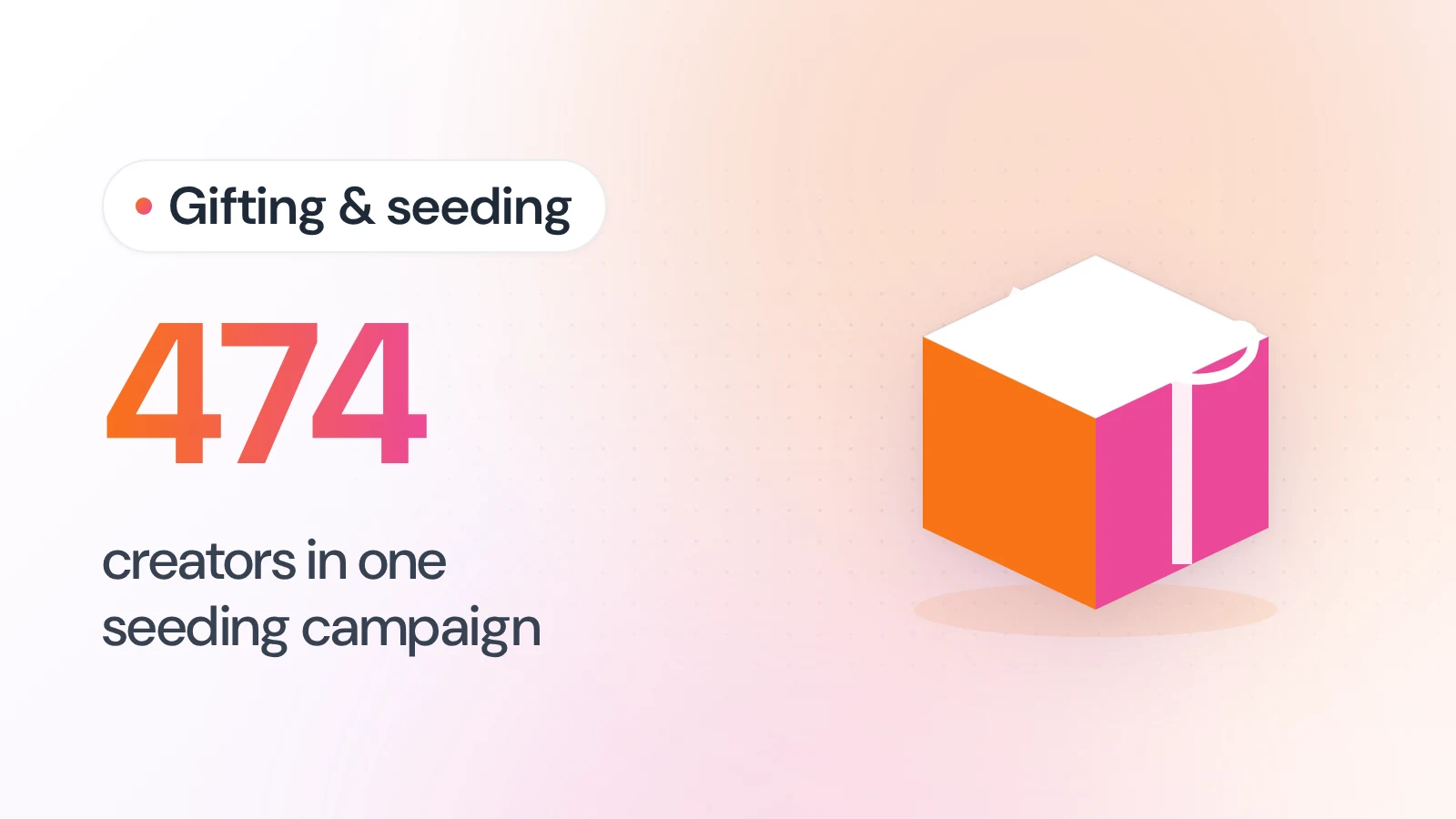
Plan for leakage at every stage. A real funnel: 474 identified → 368 reachable → 216 engaged → 137 in active conversation → 47 shipped in the first tranche. If you want 50 creators posting, brief hundreds, not sixty.
How do I track sales from influencer posts on Shopify?
Give every creator a unique discount code (created automatically at scale) and read revenue per code in Shopify. Affiliate links work as a second layer for commission deals; UTM-tagged links help attribute traffic that does not convert immediately.
Should a Shopify store start with gifting, affiliate or paid posts?
Most Shopify brands should start with gifting. It is the cheapest test of whether creator content moves your product, and it builds a shortlist of proven creators worth paying later. Affiliate suits repeat-purchase products; paid posts suit launches that need guaranteed content on a date.
How do I collect influencer shipping addresses for Shopify orders?
Ask inside the conversation rather than sending a form, because forms get abandoned and a reply does not. At scale the order can then be drafted automatically on confirmation, so nobody retypes addresses into Shopify.